
Spring is when life's alive in everything. —Christina Rossetti
Greetings Readers and Good Friends:
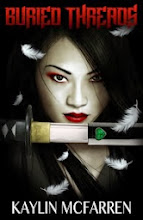
Months have slipped away in the blink of an eye and left me with so much to catch up on, and since this is the third year anniversary of my first newsletter, I felt it appropriate to begin my new quarterly updates with a Spring edition. Keeping this in mind, I’m excited to announce some wonderful, new developments. After a two-year pregnancy and excruciating labor, I’m proud to announce the delivery of my latest novel, Severed Threads. The last typed words in this novel were met with a box of Turtle chocolates and my favorite bottle of Merlot, which has become my routine after writing projects cross the finish line. This first attempt at romantic suspense has already been met with several first place awards, including the Utah RWA 2009 Great Beginnings Contest and Music City Romance Writers Melody of Love Contest. (Egad! That’s how long this one’s been in the mixer!!) In any event, it’s time to turn this baby loose (July 1st, to be exact) and move on to Book Two in my new adventure series…hopefully, at a much quicker pace.
The second bit of good news is the fact that my only unwed daughter is exchanging vows with her best friend and fiancée, Sam Watson, on Cinco de Mayo. I couldn’t be happier for Erika and, as her non-conformist beliefs remain consistent in all manners of her existent, we will be traveling to a remote town at the most southern tip of Mexico to witness her nuptials. Such fun! Especially when it comes to transporting loved ones and my 86-year-old mother to four airports before arriving at our final destination.
Lastly, I now have a second home in beautiful San Diego where I love to write and have opportunities to squeeze out my raincoat from rainy Portland weather on a regular basis. Located above Mission Bay, I’m blest with the ability to enjoy all the activity in the harbor and the amazing skylines in the evening. This location originally inspired me to write Severed Threads and is definitely keeping me sane…and considerably drier.
Now it’s time to take notes, as I’m about to recommend some great Spring reading – all of which I’ve personally enjoyed.
The Long Song by Andrea Levy - This novel was shortlisted for the Booker Prize and long listed for the Orange Prize – and for good reason. Set in Jamaica during the last turbulent years of slavery and the early years of freedom that followed, The Long Song is breathtaking, hauntingly beautiful, heartbreaking and totally absorbing. You will not be able to put this book down!
In the Place of Justice by Wilbert Rideau - In 1961, at the age of nineteen, young, black, eighth-grade dropout, Wilbert Rideau, despaired of the dead-end and small-town future his life held for him. He set out to rob the local bank and in an ill-conceived out and bungled robbery he killed the bank teller - a young, white female. He was arrested and gave a full confession at the local police station while angry mobs chanted 'kill that nigger' outside. From this beginning, where we meet Rideau, newly sentenced to death row, he starts on an extraordinary journey. One that begins in the most violent prison in America, where brutality, years spent in solitary confinement, sexual slavery and local politics govern and confine many in ways that bars alone cannot. The ending to this compelling book is like nothing you will have read before, full of breathtaking suspense and gripping, gritty realism, a heartbreaking, emotionally wrought and magical ending to Rideau's prison life is skillfully and vigorously evoked. This is a powerful and inspirational memoir unlike any other, one that is sure to question our expectations of prisoners and the role of jails in rehabilitating them.
Call the Midwife by Jennifer Worth - Jennifer Worth came from a sheltered background when she became a midwife in the Docklands in the1950s.The conditions in which many women gave birth just half a century ago were horrifying, not only because of their grimly impoverished surroundings, but also because of what they were expected to endure. But while Jennifer witnessed brutality and tragedy, she also met with amazing kindness and understanding, tempered by a great deal of Cockney humor. She also earned the confidences of some whose lives were truly stranger, more poignant and more terrifying than could ever be recounted in fiction. Attached to an order of nuns who had been working in the slums since the 1870s, Jennifer tells the story not only of the women she treated, but also of the community of nuns (including one who was accused of stealing jewels from Hatton Garden) and the camaraderie of the midwives with whom she trained. Funny, disturbing and incredibly moving, Jennifer's stories bring to life the colorful world of the East End in the 1950s.
LOST IN TRANSLATION?
The Dairy Association’s huge success with the campaign “Got Milk?” prompted them to expand advertising to Mexico. It was soon brought to their attention that the Spanish translation read “Are you lactating?”
Coors translated its slogan “Turn it Loose” into Spanish, where it read “Suffer from Diarrhea.”
Scandinavian vacuum manufacturer Electrolux used the following wordage in an American campaign: “Nothing sucks like an Electrolux.”
Clairol introduced the “Mist Stick” – a curling iron, into Germany only to find out that “Mist” is slang for manure.
An American t-shirt maker in Miami printed shirts for the Spanish market, promoting the Pope’s visit. Instead of “I saw the Pope (El Papa), the shirts read “I saw the Potato (La Papa).
Pepsi’s “Come alive with the Pepsi Generation” translated into “Pepsi brings your ancestors back from the grave” in Chinese.
Frank Perdue’s chicken slogan “It takes a strong man to make a tender chicken” was translated into Spanish and read “It takes an aroused man to make a chicken affectionate.”
When American Airlines wanted to advertise its new leather first class seats in Mexico, their slogan “Fly in leather” campaign literally meant “Fly naked (vuela en cuero)” in Spanish.
Hunt-Wesson introduced Big John products in French Canada as “Gros Jos” and later found out that in slang it means “Big Breasts.”
The Coca-Cola name in China was first read as “Kekoukela” meaning “Bite the Wax Tadpole” or “Female Horse Stuffed with Wax” depending on the dialect. Coke then researched 40,000 characters to arrive at “Koku Kole” which translate into “Happiness in the Mouth.”
And last, but not least, Parker Pen marketed a ballpoint pen in Mexico and its ads were supposed to read, “It won’t leak in your pocket and embarrass you.” The advertising company thought that the word “embarazar” (to impregnate) meant to embarrass, so the ad actually read “It won’t leak in your pocket and make you pregnant.”
How bout a little research folks?!?
KAYLIN’S SPRING RECIPE:
CARROT SOUFFLE
1 lb. carrots, peeled and sliced
½ cup melted butter or margarine
3 eggs, beaten
¾ cup sugar
3 Tbsp. flour
1 tsp. baking powder
1 tsp. vanilla extract
Cook Carrots in a little boiling water and drain after checking for tenderness with a fork. Combine carrots and butter in an electric blender or food processor and blend until smooth. Add remaining ingredients. Blend well. Spoon mixture into a lightly greased (or Pam-sprayed) 9” x 13” casserole or soufflé dish. Bake at 350 degrees for 45 minutes or until firm.
Okay, folks...here’s hoping your Spring brings wonderful memories and makes way for a toasty, prosperous year!
Best wishes and remember…keep reading!
Kaylin
Showing posts with label book release. Show all posts
Showing posts with label book release. Show all posts
Friday, April 20, 2012

Tuesday, February 16, 2010
Kaylin's Interview at Literature & Fiction
Kaylin McFarren is a member of RWA, Rose City Romance Writers, and Willamette Writers. She received her AA in Literature at Highline Community College, which originally sparked her passion for writing. In her free time, she also enjoys giving back to the community through participation and support of various charitable and educational organizations in the Pacific Northwest.
Shelagh: Please tell everyone a little about yourself, Kaylin

Shelagh: How long have you been writing?
Kaylin: Most of my life. I honestly remember writing poems when I was five years old. I got into short stories when I was in junior high and eventually some of them ended up in my high school newspaper. My interest in writing continued for years but was limited to public relations with an emphasis on press releases and daily correspondence. In regard to novels, although I’ve contemplated penning one for some time now, I’ve actually been writing manuscripts for a relatively short period of time.
Shelagh: What, or who, inspired you to write?
Kaylin: I had a great English teacher in sixth grade, Mrs. Tuttle. I remember her telling the class that we could create a magical world with words. She gave everyone a journal and instructed us to write something in it everyday. To this day, I still fill up journals with my thoughts, poems, and short stories.
Shelagh: Where do you get your ideas for your books?

Shelagh: What genres do you write and which is your favorite genre to write?
Kaylin: When I first started writing Flaherty’s Crossing, I had no idea how to define this story. After completing and entering contests, I learned to categorize it as mainstream fiction, involving all kinds of elements: suspense, drama, romance …you name it. But with my second book, I’ve become a bit wiser and made a conscience decision to write action/adventure romance. I believe this is rapidly becoming my forte. I can’t wait to get to the next chapter and to fish my characters out of shark-infested seas.
Shelagh: Can you tell us about your favorite hero and/or heroine in one of your stories?
Kaylin: Drew Coleman in Flaherty’s Crossing is one of my favorite characters. He’s an attractive, middle-aged divorce attorney who has spent most of his life trying to live up to his father’s expectations. In the midst of struggling with his obligations and job responsibilities, Drew’s marriage to Kate Flaherty explodes over trust issues and is left in total disrepair. However, when he learns his wife’s life is at risk, his priorities quickly shift and he discovers where his love and loyalties truly lie.
Shelagh: When you write about a hero/heroine, are there parts of your characters that you take from your own experiences in your life?
Kaylin: I suppose there are. Most definitely in regard to conversations, careers, and relationships. I guess that’s what makes them more believable –three dimensional, you might say.
Shelagh: Do you have favorite props that you use to bolster a story? Why do you use them?
Kaylin: Well, when I was writing Flaherty’s Crossing, I kept my father’s picture close by to remind myself of the kind of person he was. But aside from that, I’d probably say no. That is, if you don’t consider a periodic glass of wine a prop.
Shelagh: When you are writing a book, do the characters become a part of your everyday life? How do you deal with it if they take over your everyday world?
Kaylin: When my characters interact, encounter grave situations, and express their emotions, they become more real to me. I don’t think I’ve had to deal with them taking over my life; although, I do worry about getting them out of trouble if they’re cornered and I’m detained and not able to write for a while.
Shelagh: Do your families encourage you to write?
Kaylin: Absolutely! I think my husband believes I’ve somehow found my identity and purpose in life. As for my children, they’re awesome – asking me all the time how my writing’s going. My oldest daughter is an author as well and she’s constantly spurring me to stay focused and on track.
Shelagh: You have a busy life with a career and family. How do you find time to write? Do you have a schedule?
Kaylin: My children are grown, my husband travels extensively, and I have a great library with lots of peace and quite. This affords me the luxury of writing as much as I like, which could easily involve working from 10am – 10pm. However, my family finds ways to drag me away on family vacations, to movies, and to restaurants just so I don’t completely alienate myself.
Shelagh: If for some reason you could not write anymore, how would you creatively express yourself?
Kaylin: I actually studied visual arts in college and love to oil paint. Guess that’s why I ran an art gallery for seven years. I suppose if I couldn’t write any longer, I’d dig up my old supplies and find a way to paint my stories on canvas.
Shelagh: You have a special project for all of the proceeds from your book, Flaherty’s Crossing. Can you tell us about this?
Kaylin: I’m donating 100% of my proceeds to the cancer research center at Providence Medical Center in my father’s name. There’s information all about the research project I’m funding on my new website: http://www.flahertyscrossing.com
Shelagh: Why did you decide to give all of your proceeds to cancer research?
Kaylin: After witnessing my father’s relentless battle with terminal cancer and his passing at the young age of 64, my emotions were in complete turmoil. I was angry at him for leaving, at God for the suffering he endured, at the world in general for not taking notice. I searched for an outlet – a way to vent my feelings, and was fortunate in finding the resolution I needed by writing Flaherty’s Crossing. In the course of creating this story, I had the opportunity to speak to various individuals who have lost loved ones and came to realize that everyone is somehow affected by this non-discriminating disease. This novel became more than a fictional account. It evolved into a personal journey – one that my father has traveled on right beside me, inspiring and encouraging me all along the way. In order to honor his memory and to do my part to bring an end to this terrible disease in our lifetime, I have chosen to donate all the proceeds from the sale of this book to the cancer research center at Providence Medical Center, and strongly urge anyone who enjoys reading to purchase a copy of Flaherty’s Crossing.
Shelagh: Where can folks learn more about your books and upcoming events?
Kaylin: My websites: http://www.kaylinmcfarren.com http://www.flahertyscrossing.com
Shelagh: Thank you for joining us today, Kaylin.
Kaylin: Thanks, Shelagh!
Subscribe to:
Posts (Atom)



 Posts
Posts


